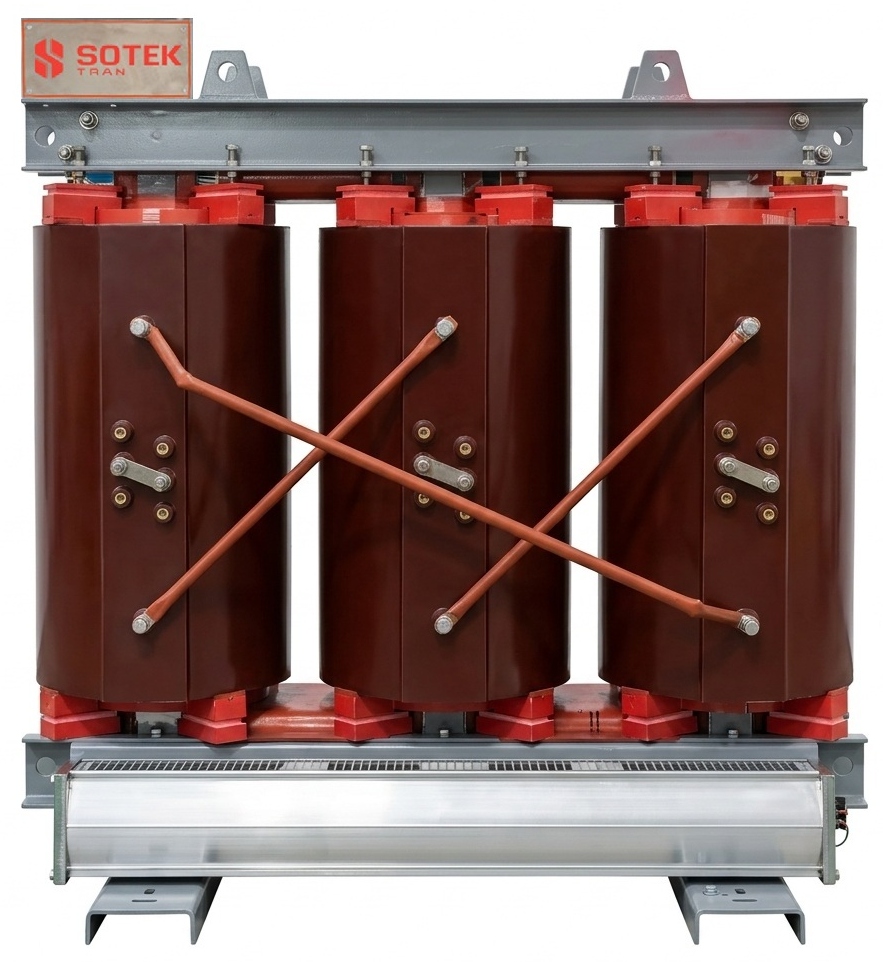
When engineering medium-voltage power distribution systems for industrial complexes, high-rise commercial buildings, hospitals, and infrastructure projects, electrical design engineers and plant managers face a fundamental architectural choice: Oil-Immersed (Liquid-Filled) or Cast Resin Dry-Type Transformers. While both technologies perform the same essential function—stepping down medium voltage (e.g., 22 kV or 35 kV) to utilization levels (0.4 kV)—their differences in fire risk, environmental footprint, installation constraints, and life-cycle costs dictate radically different application envelopes.
1. Head-to-Head Technical Comparison Matrix
| Engineering Criteria | Oil-Immersed Transformers | Cast Resin Dry-Type Transformers |
|---|---|---|
| Cooling & Dielectric Medium | Mineral Oil / Natural Ester (FR3) | Vacuum Cast Epoxy Resin + Quartz Powder |
| Fire & Explosion Risk | Flammable flash point (~150°C for mineral oil). Requires fire barrier walls. | Self-extinguishing (Class F1 under IEC 60076-11). Zero explosive oil. |
| Environmental Spillage Risk | Requires concrete oil catchment basin & oil-water separator. | Zero liquid leakage; zero groundwater contamination risk. |
| Optimal Installation Location | Outdoors, pole-mounts, padmounts, remote switchyards. | Building basements, roof plant rooms, hospitals, data centers. |
| Lightning Impulse (BIL) Strength | Superior natural dielectric surge withstand capability. | High; requires metal-oxide surge arresters (MOVs) close to bushings. |
| Maintenance Requirements | Periodic DGA oil sampling, dielectric breakdown testing, gasket sealing. | Near zero maintenance: visual check and periodic air duct vacuuming. |
| Forced Air (AF) Overload Capacity | Limited short-term thermal buffer (ONAN/ONAF). | Integrated cross-flow fans allow up to +40% continuous peak power. |
2. Architectural Fire Safety: The F1 / C2 / E2 Standard
In mission-critical installations (such as Tier III/IV data centers, metro transit stations, and modern commercial towers), insurance underwriters and municipal fire codes (NFPA 850 / TCVN) strictly restrict liquid-filled units inside occupied buildings. SOTEK cast resin dry-type transformers comply with the highest IEC 60076-11 environmental categories:
- F1 Fire Behavior: Subjected to external combustion tests; self-extinguishes within seconds after the flame source is removed, emitting near-zero toxic halogens or dense black smoke.
- C2 Climatic Withstand: Operates reliably in ambient temperatures down to -25°C without cracking the cured epoxy encapsulation.
- E2 Environmental Resistance: Withstands heavy industrial condensation, humidity (>95%), and aggressive saline atmospheric pollution.
